What is MCP (Model Context Protocol) and how is it related to AI and LLMs?
MCP is the most important thing you can learn about AI as of April 2025 so here is a quick explanation why your business needs an MCP.
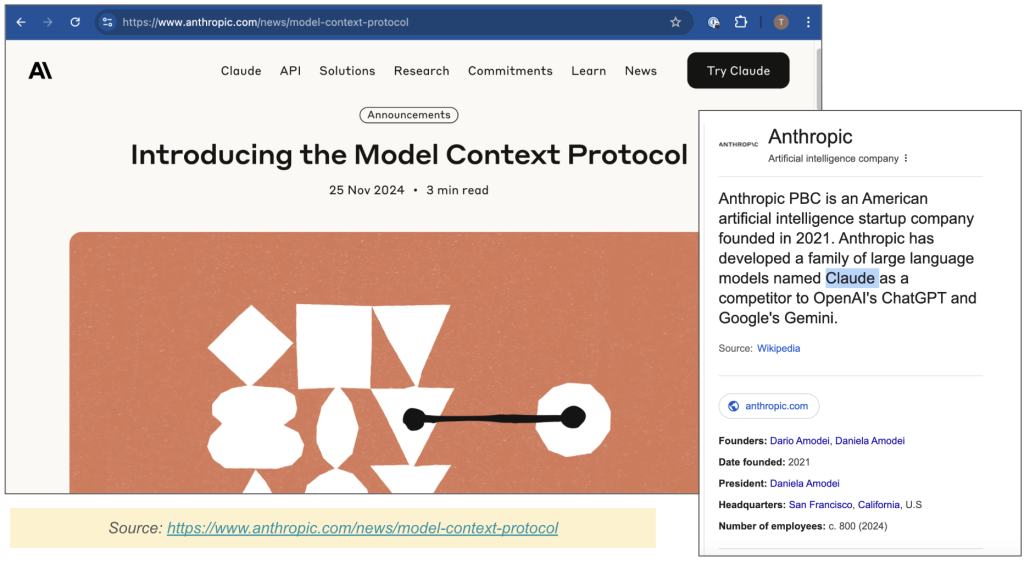
MCP is an open-source protocol for AI models introduced by Anthropic in November 2024.
Now, Anthropic is one of the few top and most powerful foundational AI companies, a competitor to OpenAI.
Their most famous product is Claude, we could say it’s a competitor to ChatGPT and I personally find Claude often better than ChatGPT for long form text and for AI assisted coding.
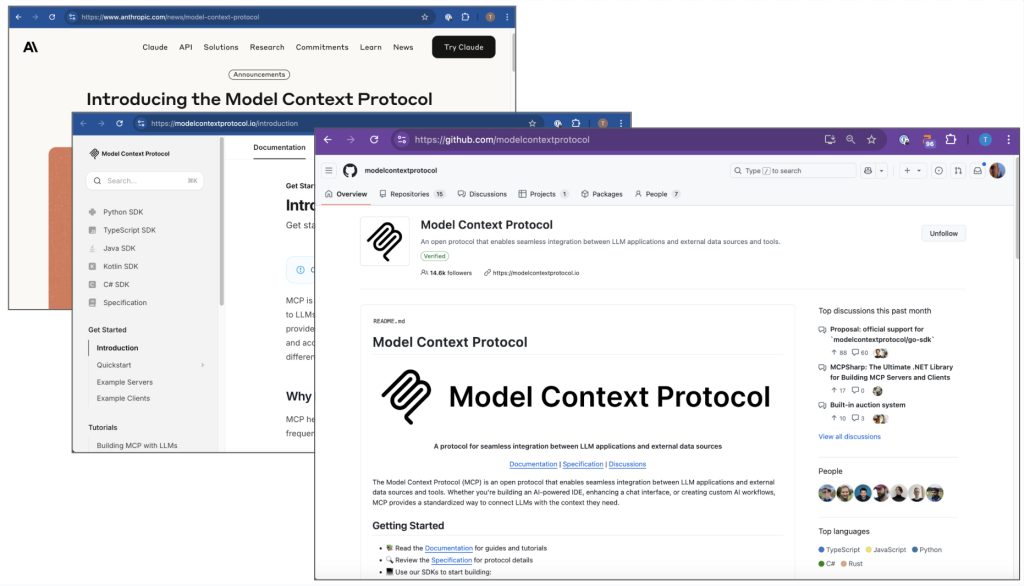
Model Context Protocol has its own website modelcontextprotocol.io and and a github organization https://github.com/modelcontextprotocol where you can find more information. You can also get the code there or even contribute since it’s open-source.
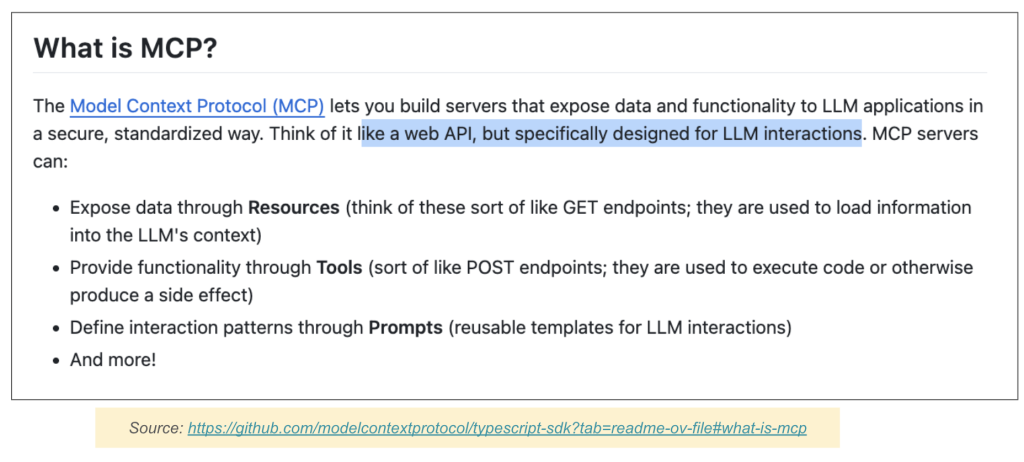
So, what the heck is MCP? In the definition by its own authors it’s like a web API.
If you don’t know what API is, that stands for Application Programming Interface. If you have a software or database with valuable services or data and you want to expose it to others, API is a must have. It’s like a standardized format allowing clients to talk to a server application.
We could say that MCP is kind of like API, but for AI. Specifically, for Large Language Models.
Why your business needs a Model Context Protocol?
Why would you need an MCP?
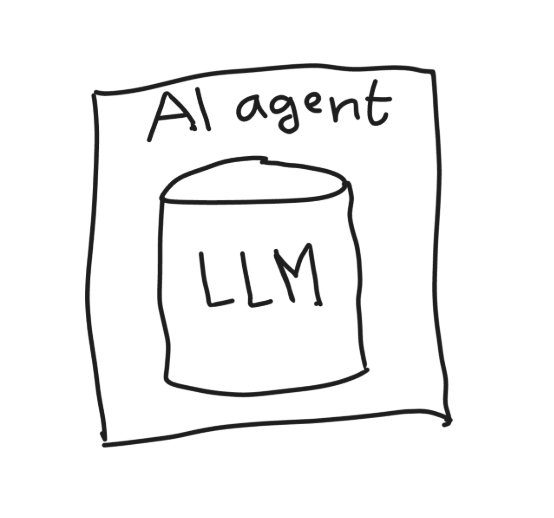
Well, I hope it’s not hard to imagine that you and your team use an AI agent for your work.
That AI agent in turn will most likely be powered by an LLM (Large Language Model).
Now, LLMs nowadays are very powerful. Some examples are ChatGPT and Claude which you can use via a web service from the server of OpenAI or Anthropic respectively.
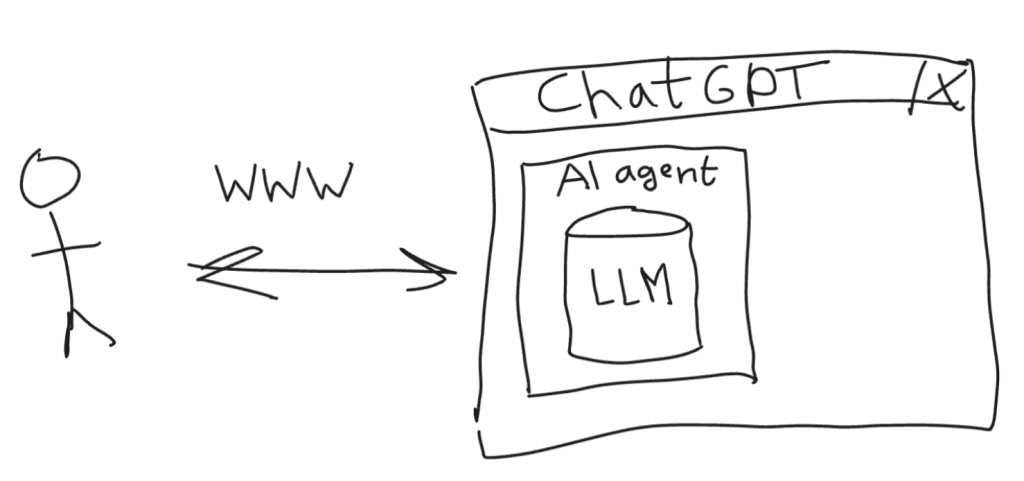
However many businesses nowadays prefer to have a self-hosted LLM, for example due to privacy and compliance reasons.
This means that LLM is sitting on YOUR server and the requests of your users or your team don’t go to 3rd parties, they stay inside your security perimeter.
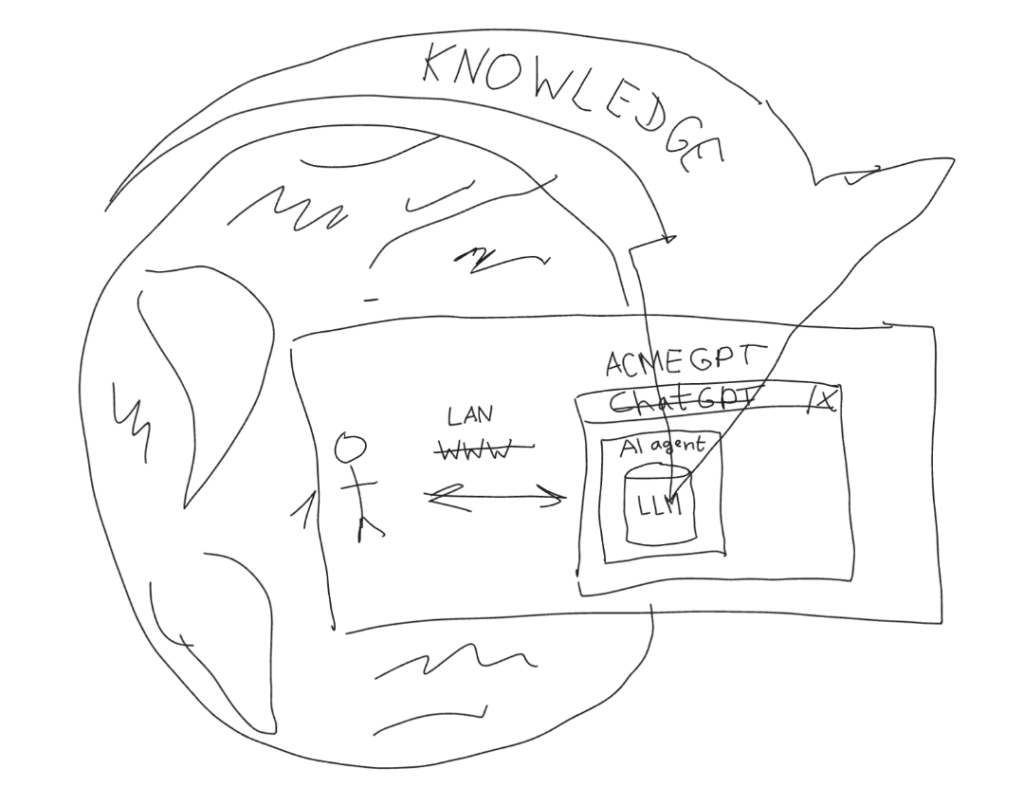
You still have this super-brain sitting on your server, as LLM has been trained with all data it could find in the public internet.
All public domain human knowledge it knows, with some caveats and limitations of course.
Limitations of LLM (sans tool calls and MCP)
So all that we described is super powerful, but still there are important limitations about LLMs and I will mention two most important ones:
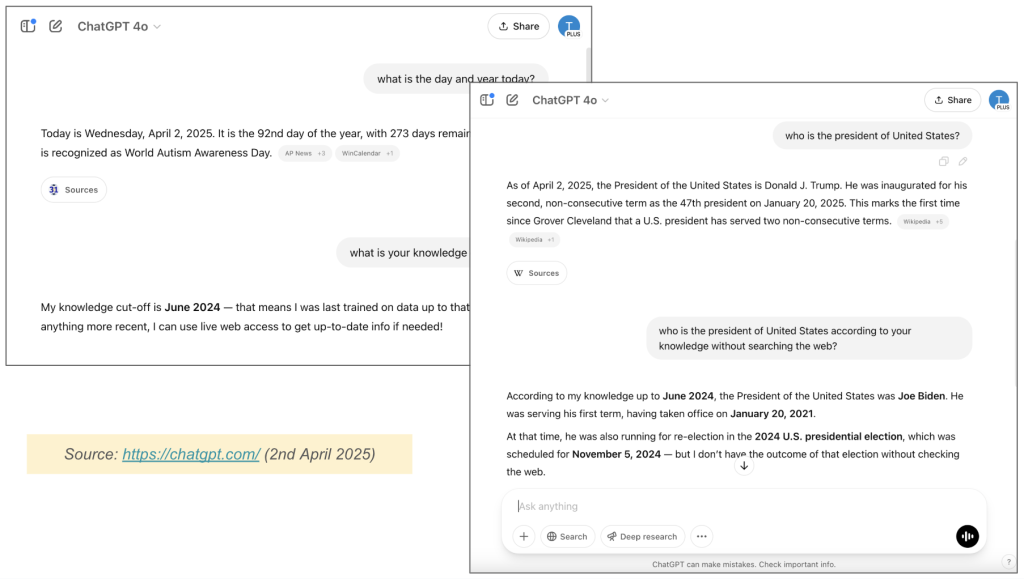
First is the knowledge cut-off time.
In this example you see what I’m talking about. Training a Large Language Model is like syphoning all public documents from internet and running a lot of GPU computations to create an artificial neural network from that. That process doesn’t repeat every day. For ChatGPT currently (in April 2025), the cut-off time is June 2024. It means internally it doesn’t know anything that happened after that.
Fairly recently the function of web search has been added which allows it to augment the answers with fresh information from search, but internally in its memory the latest, paid, version of ChatGPT still thinks that the president of US is Joe Biden and that we are now in June 2024.
Think of it as a super huge artificial brain that is super expensive to build. The only reason we are able to access it cheaply, it’s because once built, it is cheap to copy it, and that’s what LLM is.
However, no one is going to repeat this super brain manufacturing process for you every day.
So you have this super brain that thinks today is June 2024 and the way you make it more usable is equip it with ability to do external tool calls such as web search.
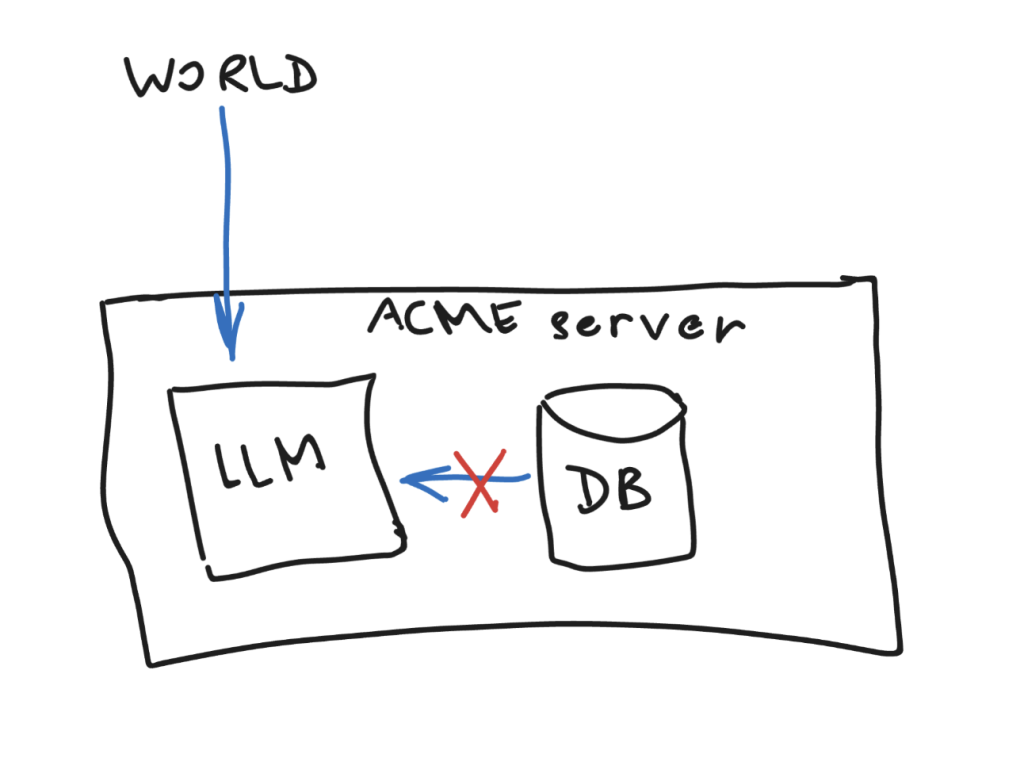
Second limitation of LLMs follows from the previous one. Since it has been trained with all it could find on public internet, it has no idea of the private and most recent data that you have in your company databases, in your filesystem, in your e-mails and ticketing system.
So if you want your LLM to become really analytical and helpful, context is important and you need to be able to augment the external world context of that superbrain with some local and relevant knowledge that is important for you.
And if you want it to be not just analytically helpful, but also agentic, then you would want to give it tools to not just read, but also write or create within systems that you use yourself.
MCP: the USC-C moment for AI
This is what MCP is about. As people behind the scenes describe it, it’s a USB-C moment for AI.
Foundational AI companies have been building external tool calls, ways for LLMs or agents to pull external APIs and so on. But just recently they decided to join forces around MCP because it makes sense and allows everybody to move faster.
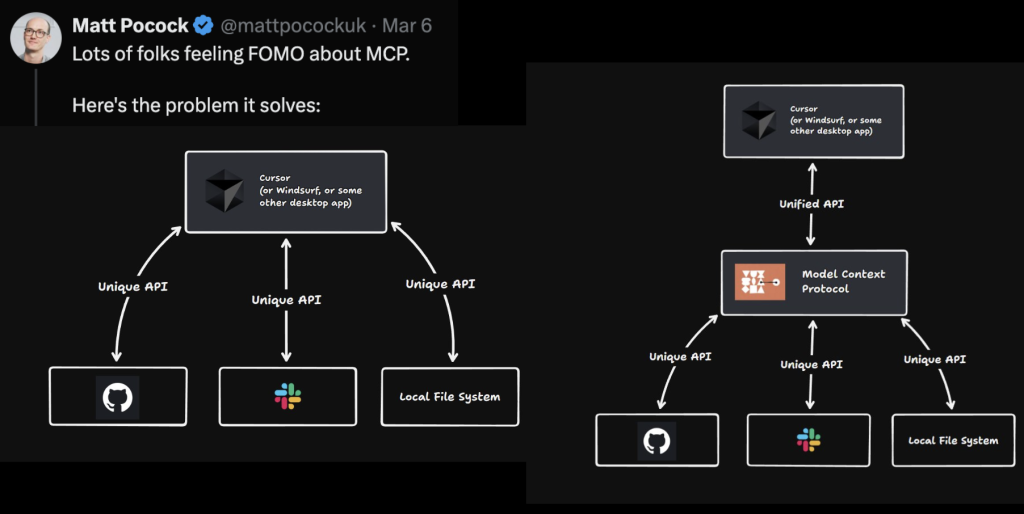
Instead of many custom integrations for File systems, databases, APIs there is now a unified protocol that all AI systems know how to use.
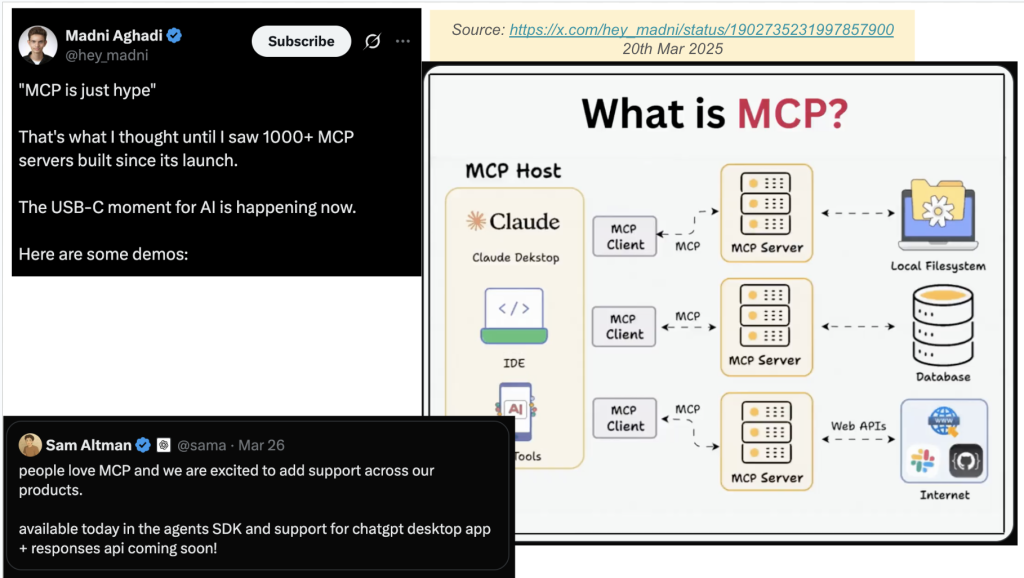
Which means that as long as your database, service or tool exposes itself via MCP, there is no need anymore to maintain different custom integrations with different AI systems.
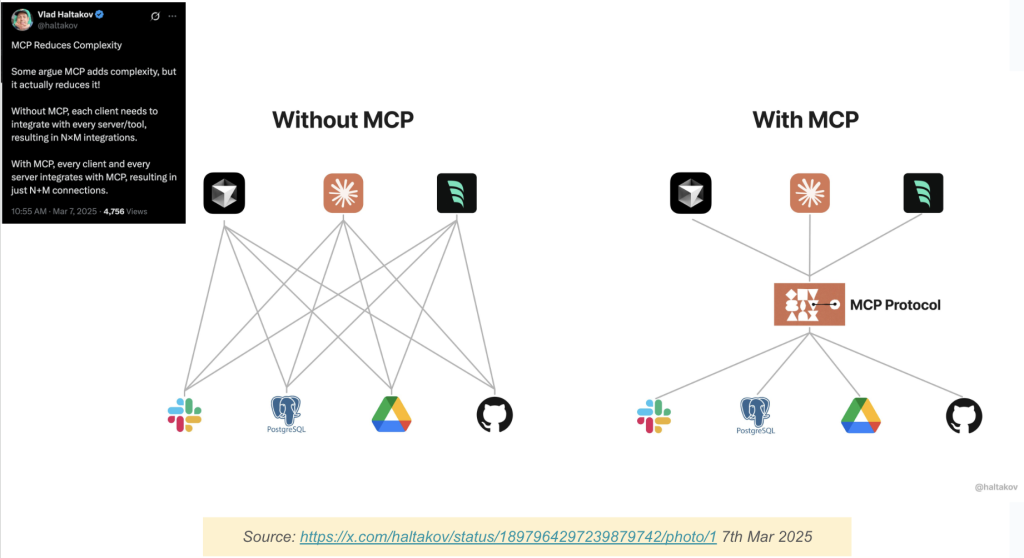
This makes things much easier for both AI agents developers and for providers of all services, tools and data sources.
You only need to figure out the MCP and the last mile delivery is taken care of automatically.
MCP business use cases
Now, let me break down the use cases of MCPs for your business.
Use case 1: Use existing publicly available MCPs for your business tools.
Use existing MCPs for popular tools and platforms (E-mail, Google Drive, JIRA, Slack etc). Amplify your work with AI.
Example: “check my JIRA tickets and complete the work committing the code into Github”.
First off, good news is there are hundreds of MCPs already, especially for popular tools and platforms. All you need to do is connect your AI agent to an MCP server of your favorite app and it will be able to do the magic. One example I’ve seen is someone asked the agent to check their JIRA ticket for software development, do the actual work and commit the code. And the system can actually do it, so it reads the job task from one system, does the job and uploads it.
Use case 2: build your own tailored MCP as a super-connector to your corporate resources
Build private MCP for your internal corporate use. Enable AI agents to work 100% efficiently with your resources in the same way as your team does.
Example: think of it as a tailored on-boarding for the AI agent where you introduce it to your specific business processes and provide it with access.
Second option is you or your company could build an MCP tailored to your internal corporate use. Think of it as an on-boarding process for your new employees, with a tailored MCP you can have AI agents get on-boarded immediately and get access to all your corporate resources, understanding all the business processes and context within seconds. Any new AI agents that your team uses or connects in future will fly through the same on-boarding process. Your human employees will benefit from this enormously too as they can always ask their AI agent to help them find or work with any corporate resource.
Use case 3: Build MCP for your product or services. Expose your offering to the internet of AI agents.
Build public or customer facing MCPs for your own product, platform or service. Expose your product or services to all AI agents your customers are using.
Example: create a public MCP server for your product, same way as you would publish API documentation.
And the final use case is obviously relevant when you have your own product, platform or service. Exposing your business to AI via MCP is somewhat similar to building a nice and informative website and doing Search Engine Optimization for it. Supporting MCP protocol or having your own MCP server makes it easier for AIs to connect with your business, which in modern age means the AI savvy customers will flock to your business, will engage faster and will do more with you as opposed to where you didn’t have the MCP.
Conclusion and action items to implement MCP for your business
- Further educate yourself on the topic of MCPs.
- Try using one of the public MCP servers for the services that are essential in your work.
3. View / read next chapter on how to approach deploying your own MCP.